
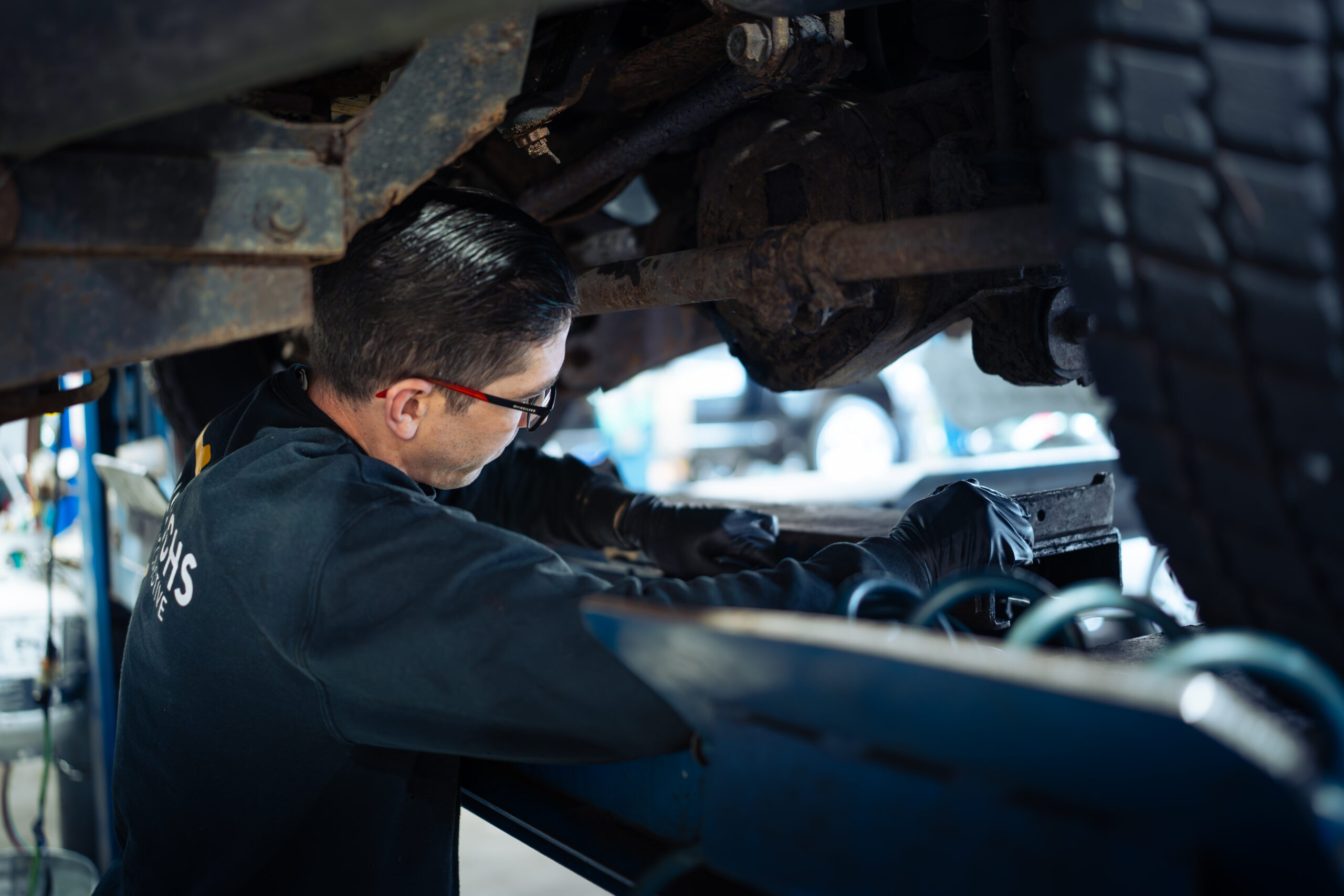
Vehicle suspension systems are carefully engineered to keep tires making flat, even contact with the road. Over time, hitting potholes, bumping curbs, or driving over rough pavement can shift these components out of position. Comparing proper wheel alignment vs. bad alignment makes it clear why routine checks are essential for vehicle safety and performance.
Understanding the difference between proper wheel alignment vs. bad alignment helps you catch minor issues early before they lead to expensive repairs and uneven tire wear.
Tire Wear and Lifespan
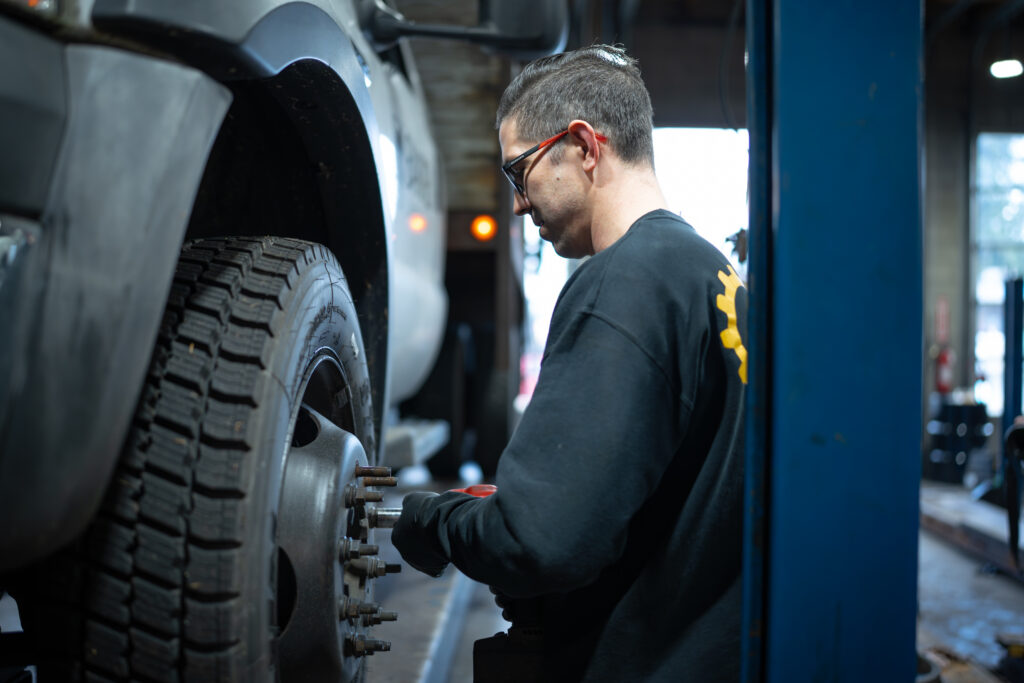
Properly aligned wheels allow tires to roll smoothly down the road, distributing weight and friction evenly across the tread surface. This balanced contact ensures maximum lifespan from your tires.
Bad alignment causes tires to drag or tilt slightly as they roll, resulting in uneven wear patterns:
-
Feathering: Tread blocks feel smooth when rubbed one way and sharp when rubbed the other.
-
Camber Wear: Heavy wear on only the inner or outer edge of the tire tread.
-
Cupping: Scalloped dips or craters forming along the edge of the tread.
Accelerated wear from bad alignment forces premature tire replacement, costing significantly more than routine maintenance.
Steering Control and Vehicle Handling
When wheels are in proper alignment, your vehicle tracks straight with minimal steering effort. The steering wheel sits level when traveling down a straight road, and the car responds predictably to turns.
With bad alignment, maintaining control requires constant steering corrections:
-
The vehicle constantly pulls or drifts toward the left or right side of the lane.
-
The steering wheel remains crooked or off-center while driving straight.
-
The steering feels loose, unresponsive, or unusually heavy during turns.
Fuel Efficiency and Rolling Resistance
Proper wheel alignment optimizes rolling resistance, allowing your engine to push the car forward with minimal effort and lower fuel consumption.
Bad alignment forces tires to scrub against the road surface instead of rolling straight ahead. This added drag increases friction, forcing the engine to work harder and burning significantly more gas during daily driving.
Strain on Suspension and Steering Components
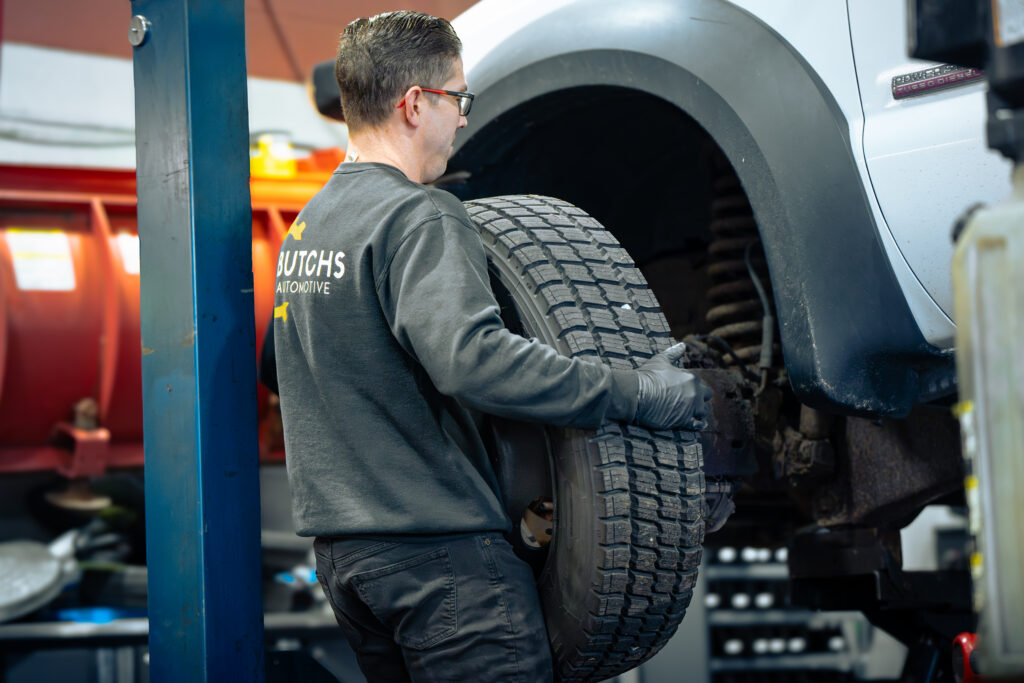
When wheels are properly aligned, road impact forces distribute evenly across shocks, struts, ball joints, and control arms.
Bad alignment places constant, uneven stress on surrounding steering and suspension parts. Over time, this extra strain causes joints to loosen, bushings to wear out quickly, and shocks to deteriorate prematurely.
How to Correct Wheel Alignment Issues
Catching alignment issues early protects your tires, suspension, and budget. Common signs that indicate a need for service include:
Persistent Vehicle Pulling: Drifting toward one side on a flat, straight road.
Crooked Steering Wheel: An off-centre wheel during straight-line driving.
Vibrations: Shaking in the steering wheel or floorboards at highway speeds.
Uneven Tread Wear: Visible wear on inner or outer tire edges.
A quick digital inspection and precision alignment adjust toe, camber, and caster angles back to factory specifications, restoring smooth handling and extending tire life.
Butch’s Automotive, friendly people, honest work, peace of mind.