Signs Your Battery Is About to Fail
A healthy car battery delivers the electrical spark needed to start your engine and powers everything from your headlights to your dashboard electronics. Because batteries wear down over time due to age, heat, and driving habits, they rarely stop working without warning. Recognizing the early signs your battery is about to fail allows you to schedule a replacement before getting stuck with a car that will not start.
1. Slow Engine Crank
When you turn the key or push the start button, the battery sends a surge of power to the starter motor. If the battery is losing its charge, the engine will turn over slowly, making a dragging or sluggish sound before starting. A delayed or hesitant crank is one of the most reliable indicators of a weak battery.
2. Clicking Sounds When Turning the Key
If you attempt to start your car and hear a rapid clicking sound coming from under the hood, your battery lacks sufficient voltage to engage the starter solenoid. While a clicking sound can occasionally point to a starter issue, a failing battery is the primary cause in most situations.
3. Dim Headlights and Electrical Glitches
Your battery supports the electrical system when the vehicle is idling or starting. As internal battery components degrade, you may notice:
-
Headlights and interior cabin lights appearing unusually dim
-
Power windows rolling up slower than usual
-
Dashboard displays or infotainment screens flickering intermittently
4. Corrosion Around Battery Terminals
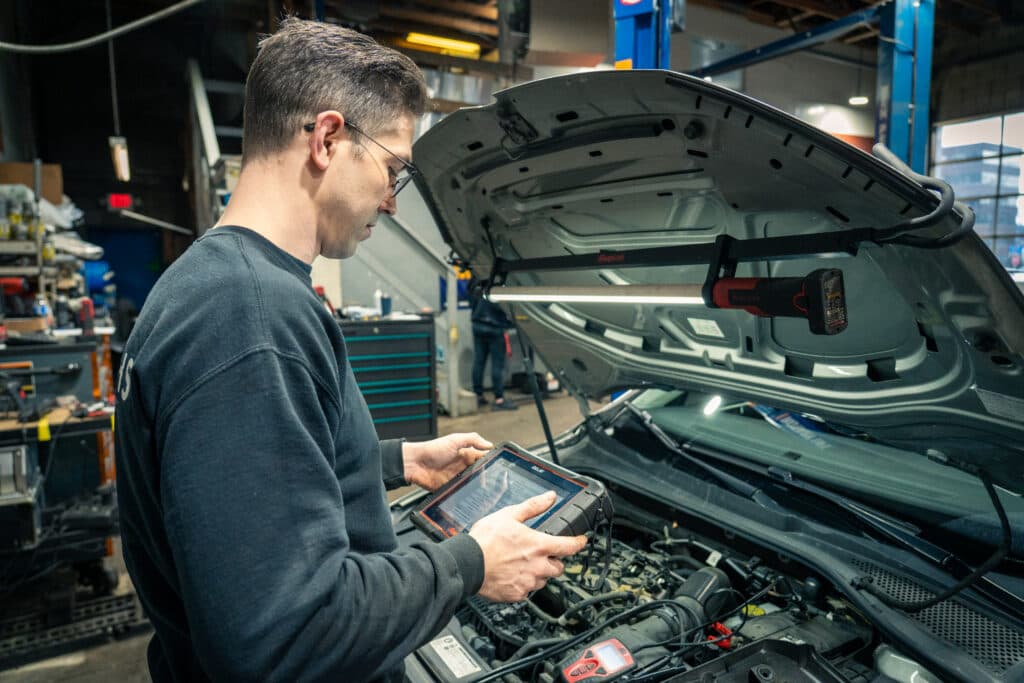
Popping the hood and inspecting the battery can reveal visible signs of wear. A white, blue, or greenish powdery substance accumulating around the positive and negative metal terminals signals battery acid leakage or venting gas. Severe corrosion restricts current flow, making it harder for the alternator to recharge the battery while driving.
5. Swollen or Bloated Battery Case
Vehicle batteries are exposed to harsh temperature swings throughout the year. Extreme heat can cause the internal fluid to evaporate or expand, leading to a swollen, bulging, or warped battery casing. A misshapen battery case indicates internal cell failure and requires immediate replacement.
6. Foul Smell Under the Hood
A damaged or overcharging battery can vent gas containing sulfur. If you notice a sharp smell similar to rotten eggs when opening the hood or standing near the front grill, the battery casing is likely leaking internal acid.
7. Dashboard Warning Lights
Modern vehicles feature dashboard indicators that track electrical output. If the battery-shaped warning icon or the check engine light remains lit while driving, your charging system requires immediate testing to identify whether the battery or the alternator is failing.

Car batteries typically last between three to five years depending on weather exposure and driving routines. Having your battery tested during routine maintenance visits ensures you stay ahead of unexpected failure.
Butchs Automotive, friendly people, honest work, peace of mind.