
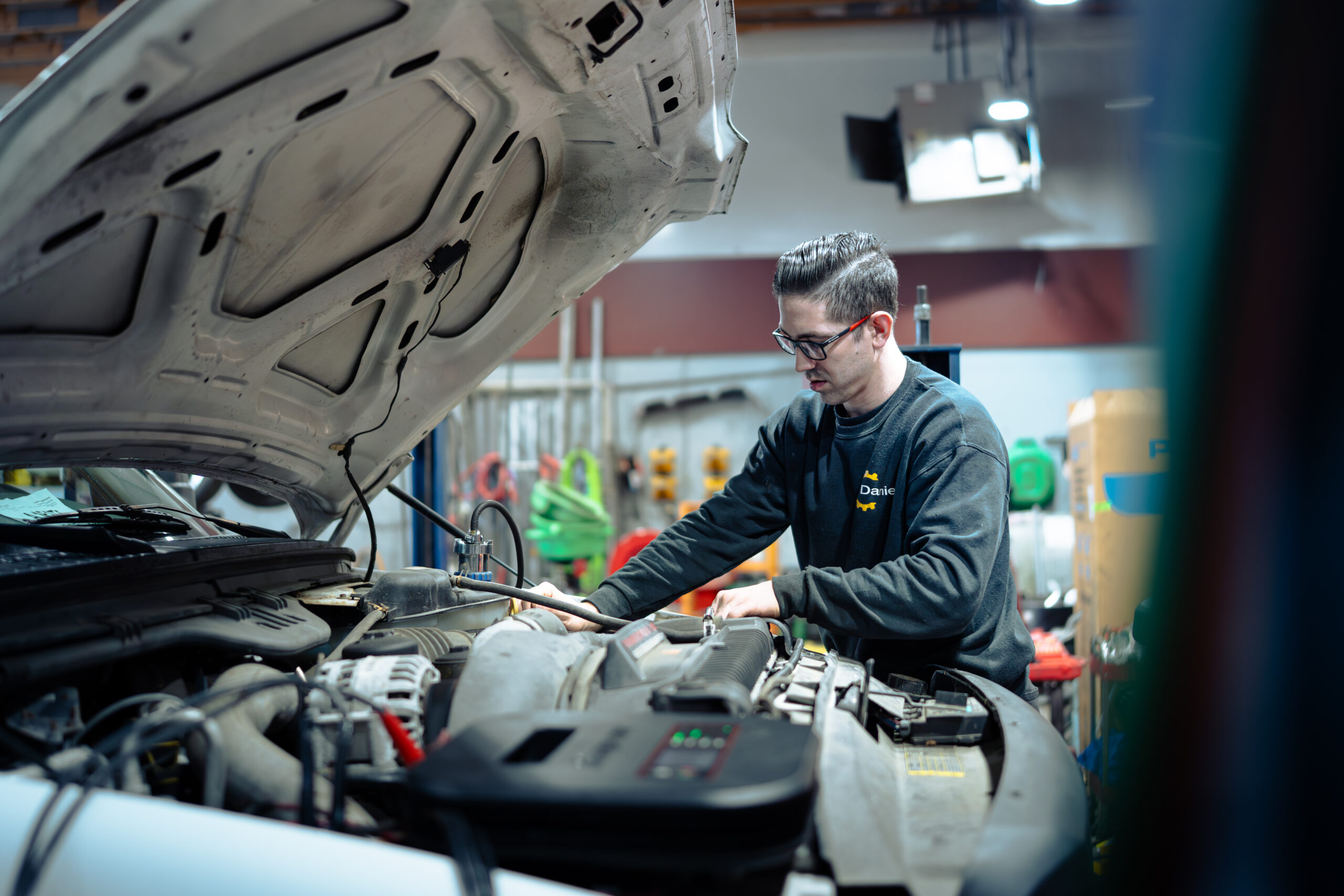
Clean engine air filters prevent dust and debris from destroying your engines. Replacing them regularly protects fuel efficiency, maintains engine power, and prevents expensive roadside breakdowns.
The Frontline Shield for Your Commercial Engines
An internal combustion engine needs a precise mix of fuel and oxygen to generate power efficiently. The engine air filter acts as the frontline shield for your vehicles, trapping dust, dirt, pollen, and road debris before they can enter the cylinders.
When that filter becomes neglected and heavily clogged, it directly impacts your daily operations, fuel costs, and long-term vehicle health. Regular fleet maintenance must include frequent air filter checks to keep your trucks running smoothly across the Fraser Valley.

Signs Your Filter Needs Immediate Replacement
When an air filter fills up with debris, it starves the engine of vital oxygen. Look out for these common warning signs during your routine inspections:
-
Sluggish Acceleration: If the vehicle feels heavy or hesitates when the driver presses the gas pedal, restricted airflow is often the primary culprit.
-
Rough Idling or Misfires: A lack of air disrupts the air-fuel mixture, fouling spark plugs and causing the engine to sputter or vibrate when sitting at a stop.
-
The Check Engine Light: Onboard computers monitor sensor data constantly. If the air-to-fuel ratio shifts too far out of balance due to a clogged intake, it triggers a dashboard warning.
-
Black Smoke from the Exhaust: When there is too much fuel and not enough oxygen, unburnt fuel exits through the exhaust system, creating dark smoke during acceleration.
The Cost of Neglect Versus Quick Maintenance
For older vehicles, a clogged filter drastically drops fuel economy. While modern fuel-injected vehicles rely on onboard computers to automatically scale back fuel usage when air is restricted, driving with a choked filter hurts the vehicle in a different way. It forces the engine to work significantly harder, dragging down overall horsepower and acceleration performance.
Over time, fine grit passing through a failing or degraded filter acts like sandpaper inside the engine cylinders, causing premature wear on pistons, rings, and valves. This leads to massive fleet repair bills that could have been avoided with a simple, affordable filter swap.
Most manufacturers recommend replacing the engine air filter every 15,000 to 30,000 miles. However, commercial fleet vehicles operating in high-traffic urban areas, construction zones, or dusty environments require more frequent attention.
Streamlining Your Fleet Maintenance Schedule
Partnering with a dedicated repair facility ensures your filters, fluids, and critical components get inspected on a strict timeline, minimizing unexpected downtime.
If your fleet stops, business stops. We give priority service, to keep you on the road.
To schedule your next commercial service, contact Butch’s Automotive today!