Why Your Vehicle Takes Longer to Start
Turning your key or pressing the start button should trigger an immediate engine response. When you notice a delay, a hesitation, or extended cranking before the engine fires up, your car is giving you an early warning sign.
Asking yourself “why is my car slow to turn over” usually points to an underlying issue across your battery, starter, fuel, or ignition systems. Addressing these early signs can prevent unexpected breakdowns and help keep your vehicle reliable.

1. Low Battery Voltage or Weak Charge
While a completely dead battery stops your car from starting at all, a weak or aging battery often results in a slow, struggling crank. The engine turns over sluggishly because the battery lacks sufficient cold-cranking amps to turn the starter motor efficiently. Extreme hot or cold temperatures can further drop battery performance, making morning starts take significantly longer.
2. Failing Starter Motor or Solenoid
The starter motor is responsible for physically turning the engine over to begin the combustion process. As the starter motor wears down, electrical resistance builds up inside the unit. This causes the starter to spin much slower than normal or produce a grinding or rapid clicking sound as it struggles to engage.
3. Fuel Pressure Delivery Issues
If your starter motor cranks at normal speed but the engine takes several extra seconds to actually catch and run, fuel pressure is a primary suspect. Common fuel delivery issues include:
-
Weak Fuel Pump: A worn fuel pump takes longer to build up the necessary pressure in the fuel rail.
-
Clogged Fuel Filter: Debris inside an old filter restricts fuel flow to the engine during startup.
-
Leaking Fuel Pressure Regulator: Allows fuel to drain back into the tank while the car sits, forcing the system to re-prime every time you start.
4. Worn Spark Plugs or Ignition Coils
Your engine requires a strong, well-timed spark to ignite the air-fuel mixture. Over time, spark plug gaps widen from wear, and ignition coils degrade. Weak or inconsistent sparks make it harder for the combustion process to take hold quickly, causing extended cranking times.
5. Faulty Engine Sensors
Modern engines rely on data from sensors, such as the crankshaft or camshaft position sensors, to calculate exact fuel and timing delivery during startup. If a sensor sends delayed or inaccurate signals to the vehicle’s computer, the system takes longer to coordinate the correct timing to fire the engine.
What to Do When Your Car Starts Slowly
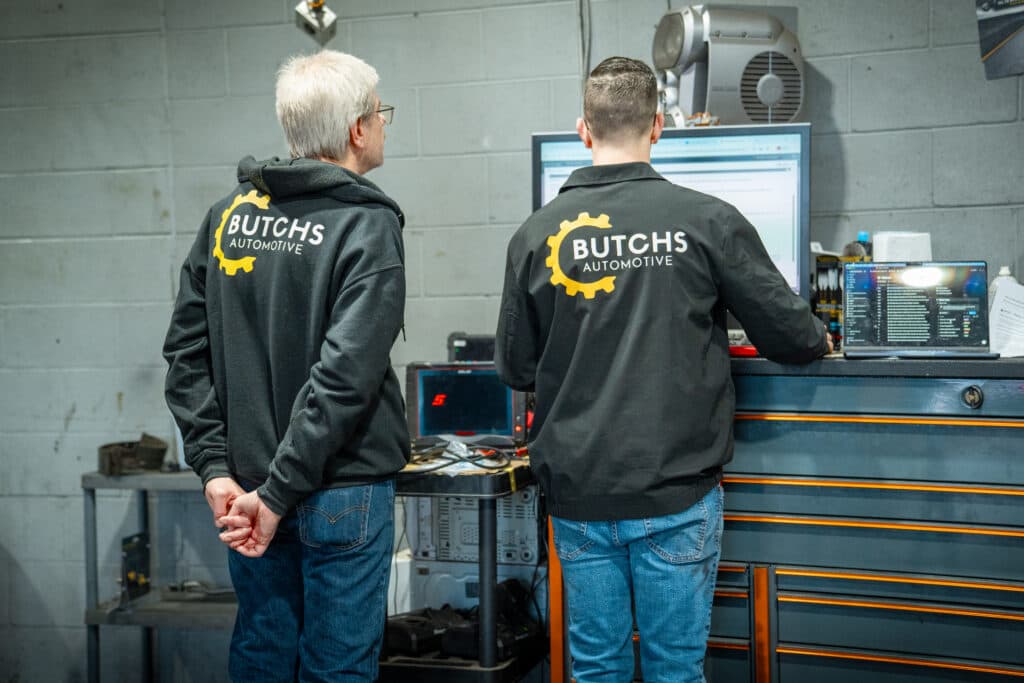
Ignoring a slow-starting vehicle eventually leads to a complete no-start condition. A comprehensive digital inspection evaluates battery health under load, checks fuel pressure stability, and scans for computer fault codes to catch small component wear before you end up stranded.
Butchs Automotive, friendly people, honest work, peace of mind.